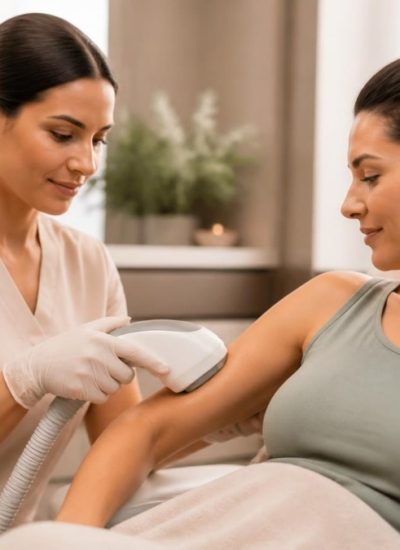
Pregnancy changes the body, and those changes are normal. Post-baby body treatments exist for the changes that bother you, but whether to treat any of them is a personal decision, not an obligation: some mothers want specific changes addressed, some want information for later, and some simply want to understand what happened and what is typical. This guide is for all three. It explains the common postpartum changes to the abdomen, which ones are cosmetic and which are medical, what non-surgical treatment can address, and how timing works.
Four Common Postpartum Changes
A changed fat pattern. Pregnancy hormones favor fat storage at the lower abdomen and hips, and for many women some of that pattern persists after weight returns to its previous range. The result can be a lower-belly fullness that feels new.
Stretched skin. Abdominal skin expands over months and is asked to contract back in less time. Skin keeps adapting well after delivery, so early looseness often improves on its own, and what remains after that recovery window depends on age, genetics, skin quality, and the number of pregnancies. These changes do not expire: laxity can be addressed years later as readily as months later.
Stretch marks. Where skin stretched faster than it could adapt, the dermis tore, leaving marks that start red or purple and fade toward white as they mature. Newer marks respond to treatment far better than mature ones, which makes the timing conversation worth having early even if treatment comes later. Our guide to stretch mark treatment in Alpharetta covers the options in more detail.
Abdominal muscle changes. The paired vertical muscles of the abdominal wall stretch during pregnancy and can separate along the midline, a condition called diastasis recti, described in plain terms by the National Library of Medicine’s overview. Some separation during and shortly after pregnancy is normal and often improves in the months after delivery. A persistent or significant separation changes how the abdomen sits at any body fat level.
Cosmetic Concerns and Medical Concerns Are Different Lanes
The fat pattern, skin laxity, and stretch marks are cosmetic concerns, and non-surgical treatment can address them to realistic degrees: fat reduction matched to the tissue, radiofrequency-based skin treatment for mild to moderate laxity, and a stretch mark protocol whose results depend heavily on how mature the marks are. The approaches are covered in our guides to skin tightening and loose skin after weight loss.
A significant diastasis is a medical matter first. Cosmetic muscle stimulation can support muscle tone, and it does not repair a true separation of the abdominal wall. The appropriate first step for a suspected significant separation is evaluation by your physician or a pelvic floor physical therapist, who can also address related issues such as core function and pelvic floor recovery. Seranova screens for this at assessment and refers when the findings warrant it, and many clients run both tracks at once: the medical evaluation and rehabilitation on one side, cosmetic treatment of fat, skin, and marks on the other. The same lane logic applies to anything that might be a hernia or an unhealed surgical issue, which belongs with your physician before any cosmetic plan.
Timing, Breastfeeding, and C-Sections
There is no single postpartum timeline that fits everyone, and a provider who gives you one without asking questions is skipping the questions that matter. The variables are individual: how your recovery is progressing, whether you are breastfeeding, how your weight is trending, and your physician’s guidance.
A few principles hold across cases. Body treatment waits for your physician’s postpartum clearance. Precautions differ by technology, and Seranova’s practice is to schedule body treatments after pregnancy and breastfeeding are complete, with individual timing confirmed at consultation. Alongside any treatment, a healthy postpartum recovery, gentle activity as your physician clears it, and balanced nutrition support your overall health, and none of it is a precondition for deserving to feel comfortable in your body. Treatment also works best once weight has been reasonably stable for a couple of months, because tissue that is still changing makes results slower to build and harder to judge. Mothers planning another pregnancy often save a full program for after the final one, which is a planning conversation rather than a rule.
A C-section changes the mapping rather than the options. Once the incision is fully healed and you are cleared, treatment can proceed and is planned around the scar area deliberately. Mention the section at your consultation so it is built into the plan from the start.
What a Realistic Plan Looks Like
A typical postpartum program at Seranova starts with a consultation that separates the four changes and screens for the medical items above. Treatment, where it makes sense, is sequenced: fat reduction matched to your tissue, skin treatment alongside or after, stretch mark sessions where marks are recent enough to have the best chance of responding, with no response guaranteed at any stage, and muscle stimulation as a later phase for tone. Courses run on the practice’s documented 12-week planning cycle, with progress compared against your documented starting point rather than daily mirror checks. Results are gradual and individual, and a sound plan states what will likely not change, especially mature stretch marks and any skin excess significant enough to be better served surgically.

Start With a Conversation
Seranova Sculpt & Beauty serves mothers across Alpharetta, Johns Creek, Roswell, Milton, and North Atlanta from 3245 N Point Pkwy, Suites 101 & 102, Alpharetta, GA 30005. Schedule your consultation online or call (770) 415-8833, whenever the timing is right for you.