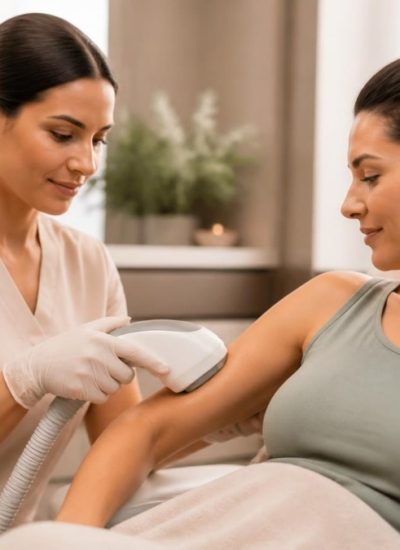

Many women in their 40s and 50s notice that the routines that maintained their body for years gradually produce different results: the same eating and the same exercise, with a changing shape anyway. For women over 40 considering body contouring, understanding why this happens makes treatment choices much clearer. The usual explanation is hormonal and structural, and while the pattern is common, it is not universal, and it does not affect every woman to the same degree. Understanding what may be changing, and what body contouring can and cannot do about it, is the foundation for deciding whether treatment makes sense for you.
Three Changes That Often Arrive After 40
Fat distribution can shift toward the middle. Estrogen influences where the body stores fat. As levels decline through perimenopause and menopause, many women find storage shifting away from the hips and thighs toward the abdomen, sometimes without any change in weight. The National Library of Medicine’s overview of menopause describes these hormonal changes in plain language.
Skin loses collagen and elasticity. Collagen declines gradually from the thirties onward, and the decline tends to steepen around menopause, when skin becomes thinner and less elastic. The American Academy of Dermatology covers this in its guidance on skin care during menopause. In practice, fat loss that once left smooth skin can leave visible laxity at 50.
Muscle mass declines without resistance training. Adults progressively lose muscle with age unless they actively train against it. Less muscle softens definition and lowers resting energy use, which quietly compounds the other changes.
How strongly each change shows up varies with genetics, health, hormone status, and lifestyle, which is one reason a treatment plan built for someone else’s body is unlikely to fit yours.
Subcutaneous Fat, Visceral Fat, and What Contouring Can Reach
Midsection fullness after 40 is often a blend of two different kinds of fat. Subcutaneous fat sits between skin and muscle and is the layer nonsurgical contouring treatments are designed to address. Visceral fat is stored deeper, around the organs, and is associated with the metabolic changes of midlife. No cosmetic device treats visceral fat: it responds to nutrition, physical activity, sleep, and where appropriate medical weight management with a physician. A responsible assessment distinguishes the two before recommending anything, because treating the reachable layer does nothing for the deeper one.
Matching Treatment to the Actual Concern
Because fat, skin, and muscle can change together, a single technology rarely covers everything that is changing for this age group, which is where a multi-platform practice has the advantage. Reducing fat under skin that has lost elasticity can leave the laxity more visible. Tightening skin over an unchanged fat pattern changes texture without changing shape. Seranova’s approach is to assess each component at consultation and build the plan from the findings: fat reduction matched to the tissue, skin treatment with radiofrequency or cold-based methods where laxity or texture needs its own phase, and muscle stimulation as a later phase for clients who want firmness and definition addressed. How those selections are made is covered in our guides to non-surgical fat reduction and skin tightening, and where cellulite has become more visible as skin thins, the approach in our cellulite treatment guide applies.
This selection process reflects the practice’s assessment protocol rather than a universal clinical formula, and that is the accurate way to describe any provider’s method. What matters is that the recommendation follows an examination of your tissue, with the reasoning explained.
The Part No Device Replaces
Resistance training deserves a specific mention, because it addresses the one change devices address least. Maintaining muscle through strength work supports definition, metabolic health, and bone density, and it improves the canvas every cosmetic treatment works on. Adequate protein, sleep, and general cardiovascular health belong in the same category. Body contouring works best as a complement to these habits, not a substitute for them: balanced nutrition, regular activity suited to your ability, adequate hydration, and consistent strength work support both your overall health and the maintenance of any cosmetic improvement, though no habit guarantees a particular treatment outcome.
Candidacy and Realistic Expectations
Good candidates are generally weight-stable, within a comfortable range of their intended weight, and focused on specific areas rather than overall weight. Results in this decade are real and tend to build gradually: collagen-related skin changes in particular develop over weeks to months, which is why Seranova structures treatment courses on a documented 12-week planning cycle with progress compared against a documented starting point, and why final skin results are judged months out rather than days. Individual response varies with age, skin quality, and consistency. At Seranova we have spent years treating exactly this age group and have watched clients achieve visible, measurable improvements documented in our before-and-after photographs, some of them remarkable; how far your own results go depends on your starting point, your course, and your body’s response.

Two situations call for a different conversation. If your weight is actively changing, through perimenopause, medication, or an ongoing weight loss effort, fat-reduction treatment is usually better staged after things stabilize. That does not always mean waiting on everything: skin-directed treatment or muscle stimulation can sometimes proceed while weight settles, and a consultation can sequence the plan around where you are rather than postponing all of it. And if laxity is severe, with true excess skin, surgical consultation is the more appropriate route, and a trustworthy assessment will say so directly.
Start With an Assessment
Seranova Sculpt & Beauty works extensively with women over 40, serving Alpharetta, Johns Creek, Roswell, Milton, and North Atlanta from 3245 N Point Pkwy, Suites 101 & 102, Alpharetta, GA 30005. Book a consultation online or call (770) 415-8833 for a consultation built around how your body is changing, not a template.